Selecting the optimal polishing pad for stone fabrication requires an informed trade-off between flexibility and durability. In my 30 years of manufacturing and exporting diamond polishing pads, I have seen how material choice, diamond quality, manufacturing process, and backing systems all converge to determine performance in granite polishing, marble finishing, concrete polishing, and other stone applications.
Bond type is foundational to pad behavior. Resin bond pads offer flexibility and are preferred for aggressive cutting on softer stones or where conformability is needed to follow contours. Metal bond pads deliver higher durability and heat resistance, making them suitable for heavy grinding and prolonged stock removal on dense granites. Hybrid bond formulations aim to capture the best of both worlds by combining resin elasticity with metallic reinforcement for improved lifespan without sacrificing initial cut. Decades of formula development have shown that subtle adjustments in resin-to-filler ratios, metal powders, and curing agents significantly affect cutting speed, gloss level, and thermal stability.
Synthetic diamond quality and grit systems directly influence cutting efficiency and finish. Consistent diamond crystal size, purity, and bonding ensure predictable material removal and surface refinement. For stone polishing tools, a typical grit progression spans coarse (50–100) for rapid stock removal, mid-range (200–400) for shaping and initial polishing, and fine to ultra-fine (800–3000+) for high-gloss finishes on marble and engineered stone. Maintaining strict control over diamond grade prevents premature wear and preserves surface gloss, which is critical for distributors and fabrication workshops requiring repeatable results.
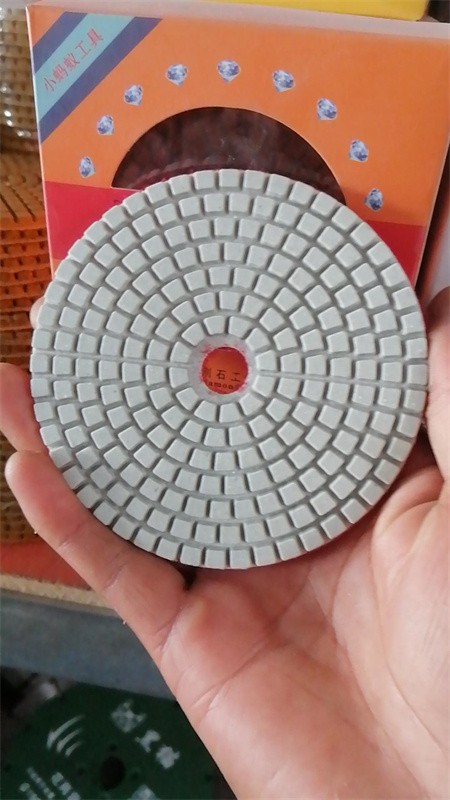
Production processes play a decisive role in batch consistency and product life. Hot pressing and cold pressing are both employed depending on bond chemistry and desired porosity. Hot pressing can improve bond densification and thermal stability for metal or hybrid pads, while cold pressing followed by controlled curing cycles is often used for resin-bond systems to preserve flexibility and prevent microcracking. Curing ovens with programmable profiles, precision molds, and calibrated pressure systems are part of a mature production line capable of handling OEM runs and large-volume exports. Quality control includes hardness testing, abrasion resistance measurement, gloss level assessment, and life-cycle trials to quantify cutting speed and total polishing lifespan.
Backing systems are often underestimated but are essential for real-world usability. Hook and loop backing, commonly referred to by the trade name Velcro, enables rapid pad changes on hand-held grinders and planetary polishers. Backing stiffness and adhesive bonding to the pad body must be engineered to withstand centrifugal forces and heat without delamination. For heavy-duty applications, reinforced backings and mechanical fasteners may be specified to ensure safety and consistent contact pressure across the workpiece.
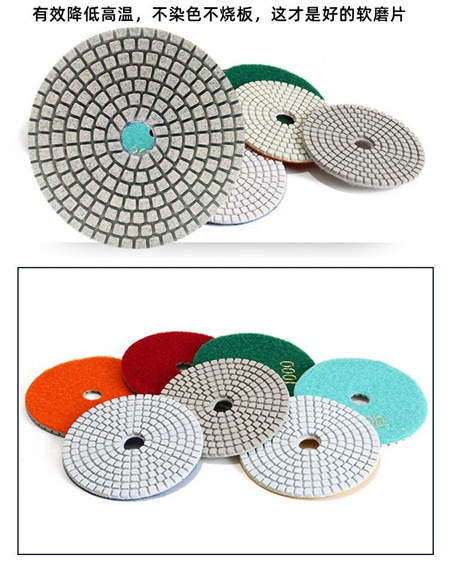
For international buyers, batch consistency and packaging are practical considerations. Statistical process control across production batches minimizes variability in grit performance and pad wear rates, supporting distributors and contractors who require predictable inventories. Export packaging practices typically include moisture-proof inner wraps, anti-corrosion inserts where appropriate, and robust outer cartons or wooden crates with palletization to protect products during long-distance shipping. Clear labeling for custom compliance and traceability of production lots supports efficient supply chain management.
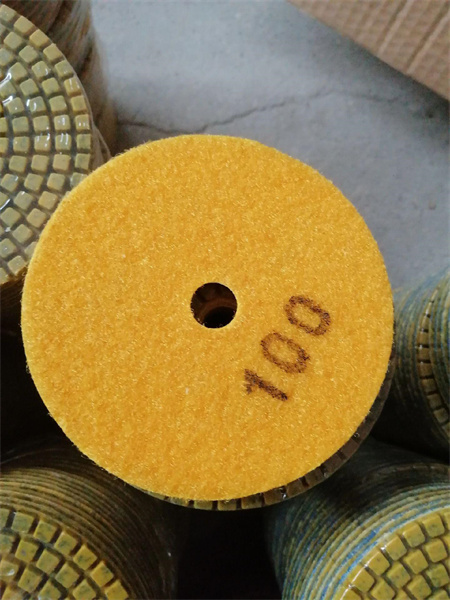
Balancing flexibility and durability in polishing pads is a systems decision that connects material science, manufacturing technology, and quality assurance. For stakeholders in the stone fabrication industry—importers, wholesalers, contractors, and workshop owners—understanding these interdependencies helps in selecting pads that deliver consistent cutting speed, targeted gloss levels, acceptable lifespan, and reliable heat resistance for granite polishing, marble finishing, and concrete polishing projects.